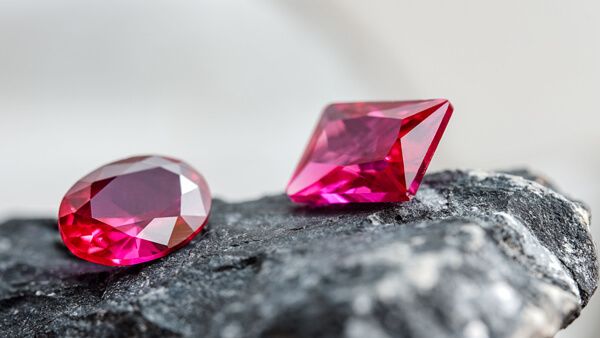
Gemstones are naturally occurring minerals, rocks, or organic materials that are valued for their beauty, rarity, durability, and cultural significance. For centuries, humans have been fascinated by gemstones due to their colors, clarity, and symbolic meanings. From ancient civilizations to modern scientific study, gemstones have remained an important part of history, art, and geology.
The study of gemstones exists at the intersection of earth science and human culture. Formed deep within the Earth under specific pressure and temperature conditions, gemstones offer insight into geological processes that occur over millions of years. Beyond their natural formation, gemstones have been associated with traditions, astrology, craftsmanship, and technological applications. This guide provides a structured understanding of gemstones, focusing on knowledge, facts, and current relevance rather than commercial use.
Understanding the Context of Gemstones
Gemstones originate through natural geological processes such as crystallization, metamorphism, and sedimentation. Some form in igneous rocks under extreme heat, while others develop through gradual changes in existing minerals. Organic gemstones, such as amber and pearls, are created through biological processes rather than mineral formation.
Historically, gemstones were used as symbols of power, protection, and spirituality. Ancient cultures documented gemstones in texts, carvings, and ceremonial objects. Over time, scientific methods such as mineralogy and gemology emerged to classify gemstones based on hardness, refractive index, crystal structure, and chemical composition.
Today, gemstones are studied not only for aesthetic appreciation but also for their geological importance and physical properties. They serve as natural records of Earth’s evolution and contribute to broader understanding in earth sciences.
Why Gemstones Matter Today
Gemstones continue to hold relevance in multiple fields. Their importance extends beyond appearance into scientific, cultural, and educational domains.
Key reasons gemstones matter today include:
-
They help scientists understand Earth’s internal processes and mineral formation
-
They contribute to academic research in geology and crystallography
-
They play a role in cultural heritage and historical preservation
-
They are used in precision instruments due to specific physical properties
-
They support learning in gemology, mineral science, and material studies
Gemstones affect a wide range of people, including students, researchers, collectors, historians, and designers. They also help address questions related to mineral sustainability, ethical sourcing awareness, and environmental responsibility.
In modern contexts, gemstones are increasingly discussed from an educational and scientific standpoint rather than solely as decorative objects.
Recent Developments and Trends in the Past Year
The past year has seen notable developments in the gemstone field, especially in education, technology, and ethical awareness.
Key updates observed during 2024–2025 include:
-
Increased use of spectroscopy and AI-assisted analysis in gemstone identification
-
Growing academic focus on synthetic versus natural gemstone differentiation
-
Expansion of traceability studies to understand geological origin
-
Updated gemstone classification databases in mineral research institutions
-
Rising interest in lab-created stones for scientific comparison studies
-
Improved imaging tools allowing non-destructive internal analysis
Researchers have also advanced methods for detecting treatments and enhancements, improving transparency in gemstone documentation. Educational institutions continue updating gemology curricula to include digital tools and sustainability discussions.
Laws, Policies, and Regulatory Considerations
Gemstones are subject to regulations that vary by country, especially related to mining, export, environmental impact, and certification. These frameworks aim to ensure responsible handling of natural resources and transparent documentation.
Common regulatory areas include:
-
Mining and environmental protection laws governing extraction
-
Export and import regulations requiring origin documentation
-
National gemstone certification standards
-
Anti-smuggling and trade-compliance rules
-
Worker safety and land rehabilitation requirements
In countries with significant gemstone resources, government agencies monitor mining activities and enforce sustainable practices. International guidelines also encourage ethical sourcing and accurate disclosure of gemstone treatments.
These policies help balance resource utilization with environmental and social responsibility.
Tools, Resources, and Learning References
Various tools and resources assist learners and researchers in understanding gemstones accurately and responsibly.
Helpful resources include:
-
Gemological reference charts for hardness and refractive index
-
Digital microscopes and imaging software for internal inspection
-
Spectroscopy tools for material composition analysis
-
Online mineral databases maintained by geological institutions
-
Educational apps explaining crystal structures and mineral classes
-
Laboratory manuals for gemstone testing procedures
-
Color grading reference scales and comparison charts
These resources support structured learning and reduce reliance on assumptions or visual estimation alone.
Table: Common Gemstone Classification Criteria
| Classification Factor | Description | Purpose |
|---|---|---|
| Hardness | Resistance to scratching | Determines durability |
| Clarity | Presence of internal features | Affects identification |
| Color | Hue, tone, saturation | Helps classification |
| Crystal System | Atomic structure arrangement | Indicates formation |
| Refractive Index | Light-bending ability | Used in testing |
Practical Knowledge and Helpful Insights
Understanding gemstones requires attention to detail and scientific observation. Visual appearance alone is not sufficient for accurate identification.
Helpful insights include:
-
Similar-looking gemstones may differ chemically
-
Treatments can alter appearance without changing structure
-
Natural inclusions help confirm geological origin
-
Hardness does not always equal toughness
-
Color variations often depend on trace elements
-
Environmental conditions influence crystal growth
Documenting observations and cross-checking data through reliable tools improves accuracy and learning outcomes.
Frequently Asked Questions
What is the difference between a gemstone and a mineral?
All gemstones are minerals or organic materials, but not all minerals qualify as gemstones. Gemstones must have visual appeal, durability, and rarity.
Are all gemstones formed deep inside the Earth?
No. Some gemstones form near the Earth’s surface, while others develop through biological processes or sedimentary conditions.
What makes one gemstone harder than another?
Hardness depends on atomic bonding and crystal structure, measured using scales like the Mohs hardness scale.
Why do gemstones have different colors?
Color differences result from trace elements, structural defects, or light interaction within the crystal.
Can two gemstones look identical but be different materials?
Yes. Many gemstones share similar appearance but differ in composition, which is why scientific testing is essential.
Table: Natural vs Synthetic Gemstone Characteristics
| Aspect | Natural Gemstones | Synthetic Gemstones |
|---|---|---|
| Formation | Geological processes | Controlled laboratory conditions |
| Inclusions | Naturally occurring | Often minimal or patterned |
| Structure | Earth-formed crystal growth | Replicated crystal structure |
| Identification | Requires testing | Requires disclosure and analysis |
Conclusion
The world of gemstones is a blend of natural science, history, and ongoing research. From their formation deep within the Earth to their role in modern educational and scientific studies, gemstones provide valuable insight into geological processes and material behavior.
Understanding gemstones through facts, tools, and structured knowledge allows learners to appreciate them beyond surface appearance. Recent advancements in analytical technology and regulatory awareness have strengthened transparency and scientific accuracy in the field.
As interest continues to grow, gemstones remain an important subject for education, research, and cultural understanding. A fact-based, responsible approach ensures that their study contributes meaningfully to knowledge rather than misconception.