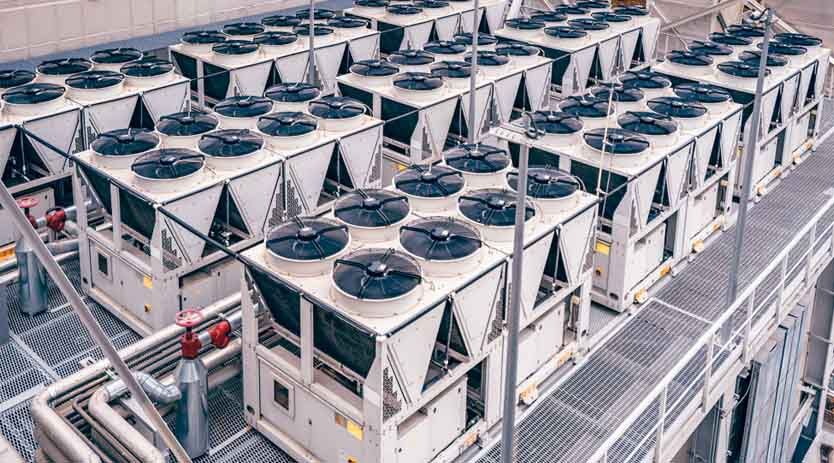
Industrial cooling towers and chillers are critical components of modern industrial infrastructure. They are used to remove excess heat generated during manufacturing, processing, power generation, and large-scale building operations. Without effective heat management, machinery efficiency drops, operational stability weakens, and equipment lifespan shortens.
Cooling towers primarily dissipate heat from water through evaporation, while chillers remove heat from liquids using mechanical refrigeration cycles. Together, they support temperature control across industries such as power generation, chemical processing, pharmaceuticals, food processing, plastics, data centers, and large commercial facilities.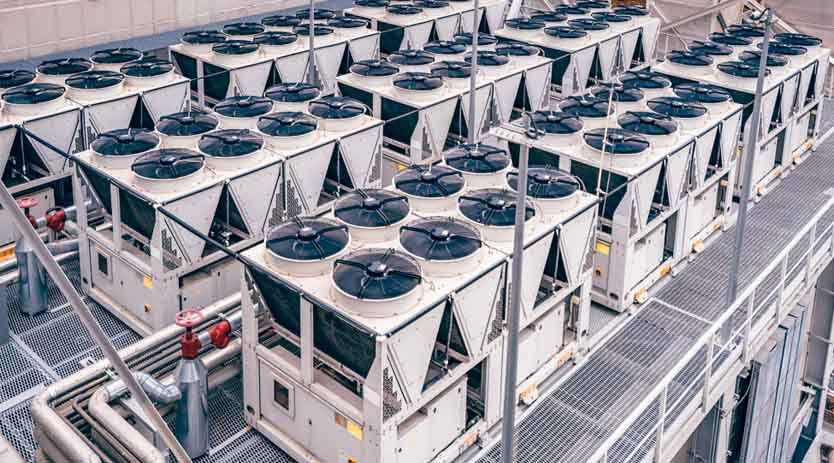
These systems exist because industrial processes naturally produce heat as a byproduct. Managing this heat safely and efficiently ensures stable operations, consistent output quality, and controlled working environments.
Why Industrial Cooling Towers & Chillers Matter Today
As industries grow in scale and complexity, thermal management has become more critical than ever. High-capacity machinery, continuous production cycles, and energy-dense processes generate substantial heat loads that must be controlled in real time.
Industrial cooling systems matter today because they:
-
Maintain optimal operating temperatures for critical equipment
-
Reduce thermal stress on machinery and pipelines
-
Support continuous production without overheating interruptions
-
Improve energy efficiency by stabilizing process temperatures
-
Help facilities meet environmental and operational standards
-
Enable high-output manufacturing in limited physical spaces
These systems affect a wide range of stakeholders, including plant operators, engineers, facility managers, energy planners, and compliance teams. Cooling towers and chillers solve problems related to overheating, process instability, equipment degradation, and excessive energy consumption.
In sectors like power generation and data infrastructure, even small temperature variations can impact performance, making reliable cooling systems essential rather than optional.
Recent Developments and Industry Trends
Over the past year, industrial cooling technology has continued to evolve in response to energy efficiency goals, environmental awareness, and digital transformation.
Key developments observed during 2024–2025 include:
-
Increased adoption of hybrid cooling towers combining dry and wet cooling principles
-
Growing use of air-cooled chillers in regions facing water stress
-
Integration of digital monitoring and IoT-based performance tracking
-
Higher focus on water conservation and drift reduction technologies
-
Expansion of modular chiller systems for scalable industrial facilities
-
Use of advanced heat-exchange materials to improve thermal efficiency
-
Emphasis on low-noise cooling solutions for urban industrial zones
Many facilities are now upgrading legacy systems with automated controls that allow real-time monitoring of flow rates, temperatures, and energy consumption. Predictive maintenance based on sensor data has also gained attention, helping reduce unplanned downtime.
Regulatory Environment and Policy Considerations in India
Industrial cooling towers and chillers operate within a structured regulatory environment in India. These systems are influenced by safety, energy efficiency, environmental protection, and water usage guidelines.
Key regulatory aspects include:
-
Energy efficiency standards guided by the Bureau of Energy Efficiency (BEE)
-
Environmental compliance under Central Pollution Control Board (CPCB) guidelines
-
Water usage and discharge norms defined by state pollution control authorities
-
Electrical safety regulations applicable to large industrial equipment
-
Occupational safety provisions related to heat, machinery operation, and maintenance
-
Building and factory regulations governing installation and operational safety
Additionally, national initiatives promoting energy-efficient infrastructure encourage industries to adopt advanced cooling technologies. Compliance with these regulations supports safer operations, reduced environmental impact, and long-term operational stability.
Tools, Platforms, and Knowledge Resources
Understanding and managing industrial cooling systems is supported by various technical tools and informational resources. These help professionals analyze performance, plan capacity, and improve system reliability.
Helpful resources include:
-
Cooling load calculation tools for industrial processes
-
Chiller performance monitoring dashboards
-
Water balance and evaporation estimation calculators
-
Energy consumption analysis platforms
-
Equipment efficiency benchmarking frameworks
-
Technical handbooks on thermal engineering and HVAC systems
-
Preventive maintenance scheduling templates
-
Industry standards documentation and compliance guides
These resources assist engineers, facility managers, and planners in making informed, data-driven decisions about cooling system operation and optimization.
Practical Tips and Operational Insights
Effective use of cooling towers and chillers depends not only on design but also on ongoing management and observation. The following practical insights support long-term system performance:
-
Maintain consistent water quality to reduce scaling and corrosion
-
Monitor temperature differentials to detect efficiency losses early
-
Ensure proper airflow around cooling towers for effective heat rejection
-
Balance chiller loading to avoid excessive cycling
-
Track seasonal variations and adjust operating parameters accordingly
-
Inspect heat exchangers regularly for fouling or blockages
-
Use automation to maintain stable operating ranges
-
Document performance trends for long-term analysis
Small operational adjustments, when applied consistently, can significantly improve system reliability and energy efficiency over time.
Comparison Table: Cooling Towers vs Chillers
| Aspect | Cooling Towers | Chillers |
|---|---|---|
| Primary Function | Heat rejection through evaporation | Heat removal using refrigeration cycles |
| Typical Application | Power plants, heavy industry | Process cooling, commercial facilities |
| Water Interaction | High water involvement | Lower or indirect water involvement |
| Climate Sensitivity | Affected by ambient humidity | Less dependent on humidity |
| Integration | Often paired with chillers | Can operate independently or in systems |
This comparison highlights how both systems serve complementary roles in industrial cooling strategies.
Frequently Asked Questions
What is the main difference between a cooling tower and a chiller?
A cooling tower removes heat from water using evaporation, while a chiller removes heat from liquid through mechanical refrigeration. They often work together in large systems.
Which industries rely most on industrial cooling systems?
Power generation, chemical processing, pharmaceuticals, plastics manufacturing, food processing, and data infrastructure depend heavily on cooling towers and chillers.
How does climate affect cooling tower performance?
High humidity reduces evaporation efficiency, while ambient temperature influences overall heat rejection capacity.
Why is water management important in cooling towers?
Water quality impacts scaling, corrosion, and biological growth, all of which affect system efficiency and longevity.
Can digital monitoring improve cooling system performance?
Yes. Digital tools help track temperatures, flow rates, and energy usage, enabling timely adjustments and predictive maintenance.
Conclusion
Industrial cooling towers and chillers play a foundational role in modern industrial operations. They enable temperature control that supports equipment stability, production continuity, and energy efficiency across diverse sectors. As industries expand and processes become more demanding, effective thermal management becomes increasingly vital.
Recent developments show a clear shift toward efficiency-focused design, digital monitoring, and responsible water usage. Regulatory frameworks in India further guide safe and sustainable operation, encouraging industries to adopt optimized cooling practices.